










Pepper Spray vs Stun Gun: What’s Better for Self-Defense (and Why Your Carry Setup Matters More Than the Tool)

Choosing between pepper spray vs stun gun is one of the most common self-defense buying decisions—and it’s also one of the easiest to get wrong if you focus on “which one is stronger” instead of which one you’ll actually carry, access, and use under stress.
Here’s the authoritative, no-drama take: pepper spray generally offers better distance, wider real-world applicability, and fewer “perfect conditions” requirements. A stun gun can still make sense, but only if you understand its limitations and build a carry plan around them.

This guide will help you decide based on real-world constraints: distance, contact risk, legal and situational considerations, carry comfort, and what to do after deployment.
Quick answer: pepper spray is usually the better first buy
If you want a single tool that works for most everyday “get off me and let me escape” scenarios, pepper spray typically wins because it’s designed to create space—and space is safety.

A stun gun requires close contact (or very close proximity). That increases your risk in the exact moment you’re trying to reduce it.
That said, there are legitimate reasons someone may choose a stun gun—or carry both. The best choice depends on your environment and your habits.
The real question: what problem are you solving?
Before you pick a tool, define your most likely scenario:

- Parking lot / walking to car at night (distance, surprise, moving targets)
- Apartment hallway / stairwell (tight spaces, limited escape lanes)
- Dog threat (fast movement, short reaction window)
- Travel / commuting (carry restrictions, comfort, concealment)
Self-defense tools aren’t magic. They’re escape-enablers. Your goal is not to “win a fight”—it’s to create a window to leave.
Pepper spray: strengths, limits, and who it fits
Why pepper spray works in real life
Pepper spray is primarily about range + disruption. It attacks the eyes/airways and creates immediate dysfunction that can help you disengage.
Authorities that cover chemical irritants consistently emphasize the same priorities after exposure: get to fresh air, wash off, rinse eyes with water—that should tell you how quickly these products can create incapacitating irritation in the real world. The CDC’s guidance for riot control agents (which it notes may also be used for personal protection, like pepper spray) stresses immediate fresh air and decontamination, including rinsing eyes with plain water for 10–15 minutes if burning or blurred vision occurs (CDC riot control agent fact sheet).
Advantages of pepper spray
- Creates distance (you don’t need to be in arm’s reach)
- Better for “unknown” threats where you need an instant disengagement option
- Works while you’re moving (spray, move, escape)
- Less strength-dependent than contact tools
Common limitations (and how to plan for them)
- Wind and blowback risk outdoors (especially with fog-style sprays)
- Confined spaces can expose you too
- Accuracy and stress: you still need reps and a consistent carry position
Also: there’s no “antidote.” Decontamination and time are key. Poison Control notes symptoms usually resolve in 20–30 minutes but can last longer, and recommends irrigation and washing; it also flags greater risk for people with asthma/COPD (Poison Control: pepper spray dangers).
Best fit for pepper spray
Pepper spray is a strong pick if you:
- Want the best odds with the least contact risk
- Walk alone, park in public lots, or commute
- Want a tool you can deploy quickly and then run
If you’re shopping for options to pair with other everyday defensive tools, browse Uppercut Tactical’s Self Defense collection and Stun Guns collection to compare form factors and carry styles.
Stun guns: strengths, limits, and who they fit
What a stun gun is (and what it isn’t)
A stun gun is a contact-based electrical device meant to disrupt and deter through pain and neuromuscular interference.
The big practical reality: if you choose a stun gun, you are choosing a tool that typically requires you to be close enough to touch the person with it. That can be workable in some environments—but it is not the same role as pepper spray.
Advantages of a stun gun
- Less affected by wind and outdoor conditions
- Useful in tight spaces where spray blowback is a concern
- Visual + audible deterrence can matter in some situations
Common limitations (and why they matter)
- Requires close contact: you must be within reach
- Harder to use if grabbed, pinned, or surprised
- Can be taken from you if you don’t have strong retention habits
Stun guns can still be a rational choice if your daily life is mostly indoors, your building has tight halls, or you’re specifically trying to avoid chemical exposure to yourself or people around you.
Pepper spray vs stun gun: side-by-side comparison
| Factor | Pepper spray | Stun gun |
|---|---|---|
| Typical engagement distance | Short to medium (varies by model) | Very close / contact |
| Works while moving away | Yes | Limited |
| Risk to you | Blowback possible | Grappling/contact risk |
| Best for outdoors | Often yes (mind wind) | Yes (no wind issue) |
| Best for tight spaces | Risk of self-exposure | Often better |
| Skill requirement | Moderate (aim + reps) | Moderate to high (contact + control) |
What matters more than the tool: your carry setup
Most self-defense tools fail in real life for one reason: they weren’t accessible in time.
If you want your tool to work under stress, you need three things:
- Consistent location (same pocket/compartment every day)
- A clean draw (no digging, no tangles)
- A simple decision rule (you don’t debate—your body executes)
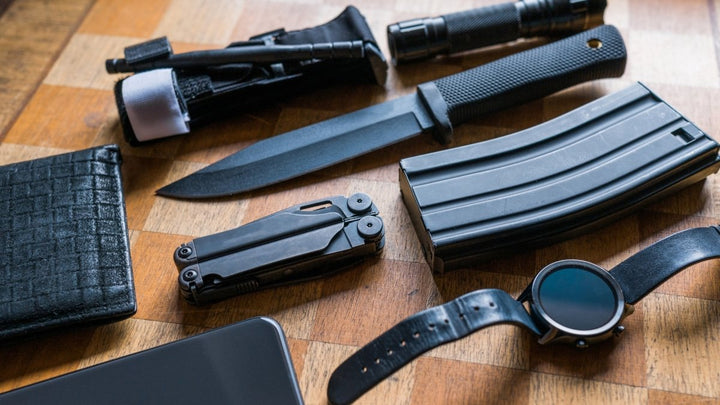
If you carry in a bag, the bag is now part of your defensive system. Consider setting up a dedicated pocket in an everyday carry pack from the Tactical EDC Bags collection so the tool is always where your hand expects it.
How to use pepper spray (responsibly) in a real emergency
This is not legal advice and not a substitute for training, but the basic priorities are consistent across authoritative safety guidance:
- Move to safety and create distance immediately
- Aim for the face (eyes/nose/mouth area)
- Use short bursts and be ready to move
- Escape—don’t stand there “checking results”
If someone is exposed (including you), Poison Control and public health guidance emphasize decontamination: fresh air, wash skin, and rinse eyes with water. Poison Control includes a common recommendation to irrigate eyes for 10–15 minutes and remove contacts (Poison Control: pepper spray dangers). The CDC’s riot control agent guidance similarly recommends rinsing eyes with plain water for 10–15 minutes when eyes burn or vision is blurred (CDC riot control agent fact sheet).
If you get spray directly in the eye and it won’t calm down after thorough irrigation, Poison Control’s eye-exposure guidance generally recommends urgent evaluation when symptoms persist (and emphasizes immediate irrigation for 15–20 minutes for eye exposures to irritants/poisons) (Poison Control: poison in the eye).
How to use a stun gun (responsibly) in a real emergency
A stun gun plan has to account for contact distance. Your mindset should be:
- Tool is in hand early if you’re entering a sketchy environment
- Your non-tool hand protects your head/space
- You’re using it to break contact and escape, not to “stay and fight”
If your stun gun is buried in a purse or backpack, it’s not a defensive tool—it’s a purchase you hope you never need.
Mistakes that get people hurt (and how to avoid them)
Mistake 1: buying a tool you won’t carry
If it’s uncomfortable, awkward, or socially inconvenient, it will be left behind. Choose the option you can carry daily.
Mistake 2: treating a stun gun like a distance tool
It’s not. If your threat model is “someone closing from 10 feet away,” a contact tool asks too much of you.
Mistake 3: no practice under mild stress
You don’t need tactical cosplay. You do need basic reps:
- draw the device from your real carry location
- disable the safety (if present)
- aim/position and simulate one short deployment
Mistake 4: ignoring aftermath and decontamination
Pepper spray exposure is usually temporary, but not always trivial—especially for people with lung conditions. Poison Control notes respiratory symptoms and the potential for more severe effects in people with asthma/COPD (Poison Control: pepper spray dangers).
So… which should you buy?
Use this decision filter:
Choose pepper spray if:
- You want the best general-purpose self-defense tool
- You’re often outdoors, walking, commuting, or in parking lots
- You prefer a tool that helps you disengage at distance
Choose a stun gun if:
- Your typical environment is indoors/tight spaces
- You strongly prefer a contact tool and will carry it consistently
- You understand it’s a close-range escape tool—not a stand-off device
Consider carrying both if:
- You want distance (spray) + a close-in contingency (stun gun)

- You can carry both without compromising access
Build your “no-drama” self-defense kit (Uppercut Tactical style)
If your goal is responsible, practical personal protection, build around a simple, everyday kit:
- A primary tool you’ll carry daily (pepper spray and/or stun gun)
- A consistent carry method (pocket, belt, or a dedicated compartment in an EDC bag)
- A quick plan: move, deploy, escape, call for help
Browse Uppercut Tactical’s Self Defense collection to start building your setup, and if you want a compact electrical option, compare models in the Stun Guns collection.
Final CTA
Don’t overthink the “best” tool—choose the tool you will actually carry, then set it up so you can access it in under two seconds. If you want a ready-to-go place to start, shop Uppercut Tactical’s self-defense gear and pair it with a practical carry solution from our Tactical EDC Bags lineup.
0 comments